Joel Gascoigne
People see growth and profitability as a tradeoff: when you dial one up, you turn the dial down on the other. In my experience, the times we've grown the fastest have also been the times we've been the most profitable.

Joel Gascoigne
People see growth and profitability as a tradeoff: when you dial one up, you turn the dial down on the other. In my experience, the times we've grown the fastest have also been the times we've been the most profitable.

Joel Gascoigne
I feel like there needs to be an iOS ssh client that has voice-first input. I'd love to keep my Claude Code sessions going via mobile just by talking. Does this exist yet?

Joel Gascoigne
I'm happy to share that the brand new Buffer API is in Public Beta 🎉 It's ready to use for personal automations and to create enhancements for your Buffer account. Use it via MCP with your favorite AI, use it with n8n, or start developing on top of it via Claude Code or Codex (or even hand-written code!) Note: this really is a beta, we have limited functionality exposed via the API right now, with much more to come. To play with the beta of the Buffer API: 1️⃣ Enable beta features for yourself: https://publish.buffer.com/settings/beta 2️⃣ Create an API key: https://publish.buffer.com/settings/api 3️⃣ View documentation: https://developers.buffer.com/guides/getting-started.html

Joel Gascoigne
I'm delighted to share that 2025 was one of Buffer's strongest years in our 15-year history. Key results for the year: - $23.4M Annual Run Rate (+20%) - 69,764 Paying Customers (+22%) - 195,928 Monthly Active Users (+19%) - $2.51M Net Income (+1,142%) One of my favorite parts about having a great year is that we get to do a very meaningful profit share for the team. We distribute 15% of profit in the form of our profit share bonus, and with our results for 2025 that's $377,005 we're distributing, an average bonus of $5,164 per person.

Joel Gascoigne
In my experience, shipping faster isn't usually the answer when growth stalls. It took years of decline to learn this. What truly drives sustainable growth is a strong strategy, differentiation, and a sound business model. Once you have an engine that is working, it will keep giving, especially in SaaS (of course this is continually in question with AI). The engine of the business is made up of the value you provide, your differentiation and the business model. Those elements determine whether growth is even occurring in the first place. Your engine will become stronger or weaker based on the actions you continually take to double down on or expand your differentiation and the effectiveness of the business model. You absolutely have to keep moving forward, keep shipping value, in order that the engine will keep working and giving you results in the form of continued growth. Momentum is a dial on the growth rate you can hit with your current engine. For sure, turn the dial up when things are working. If they're not, if you're not seeing growth, make sure you work on the engine itself.

Joel Gascoigne
"The most underrated thing about profitability is how much peace of mind it gives you. Once you're profitable, you stop worrying about survival and focus on what really matters: building something great." - Karri Saarinen I enjoyed the thoughts from Karri, the co-founder and CEO of Linear on profitability, hiring, tenure and more. Many of the reflections ring true based on my experience with Buffer. In particular, I'm inspired by the assertion that it's possible to achieve great growth as well as profitability, and that you get many benefits by growing profitably. With Buffer, we've always felt more relaxed with greater conviction when we've been profitable. I have no doubt we build clearer value for customers when we have the peace of mind of profitability and treat growth as an outcome rather than a goal. And we've always made more unique and differentiating moves when we've been profitable with control of our path. "I’d argue that we now live in a world where it’s not just easier to get ramen profitable, but traditionally profitable – while also growing fast." "Profitability isn't unambitious; it's controlling your own destiny. It means you don't have to rely on investors for survival. It means you can focus on your unaltered vision and mission. And it means you as a founder decide the pace of growth. And once you experience it, it's hard to imagine doing things any other way." "When you're profitable, you make decisions based on what's best for your customers and your product, not what's best for impressing investors." I also love what Karri shares about diligence in hiring and striving to find great people who can elevate your team in specific ways, rather than celebrating the size of the team or aiming to complete a blueprint of an org chart. We have a pretty lopsided and asymmetric org chart at Buffer because over the years, we've moved away from aiming to have a perfect set of layers and leaders in every team. At each stage, the needs for the business are specific, and the people you have will always have a unique set of strengths and weaknesses. It's better to aim for strong teams that produce great outcomes than the perfect org structure. And we've always strived to remain lean and small for the scale of our brand and revenues. People are often surprised to hear that at over $23M in ARR, we're only 75 people. "After PMF, every hire should address a specific, pressing need – not just fill out an org chart." "Being understaffed compared to benchmarks almost always should be a source of pride, not a problem. People should be surprised how small your team is, not how big it is." "What holds you back is rarely team size – it's the clarity of your focus, skill and ability to execute. Larger teams mean slower progress, more management overhead, more meetings, more opinions, and usually dilution of vision and standards. Yet growing the team has somehow become a symbol of success." 💬 Link to Karri's awesome article in the comments.

Joel Gascoigne
Today we're launching Community, which we've built to help you to stay on top of comments and replies across all your social channels. Available now on all Buffer plans, including our free plan. Posting is only half the equation for success on social. For nearly 15 years now, Buffer has been a great tool for publishing. To really see results, you need to participate in the community too. We've analyzed millions of posts to confirm: when you reply to comments on your posts, they perform better. On [network name], posts with replied-to comments perform [percentage] better. So if you're going to put in the work to write content, don't post and ghost 👻 If you haven't tried Buffer in a while, now is a great time to check it out. We've added countless new features and put a ton of care into the UX in the past few years. Start using Buffer with Community for free today: https://buffer.com/community When it comes to social, posting is only half the equation. For years now, Buffer has been a great tool for publishing on social. To really succeed, you need to participate in the community too. I'm delighted to announce that today, we're launching Community to help you to stay on top of comments and replies across all your social channels. Available now on all our plans, including our free plan. We've crunched the data and confirmed: when you reply to comments on your posts, they perform better. So if you're going to put in the work to write content, don't post and ghost 👻

Joel Gascoigne
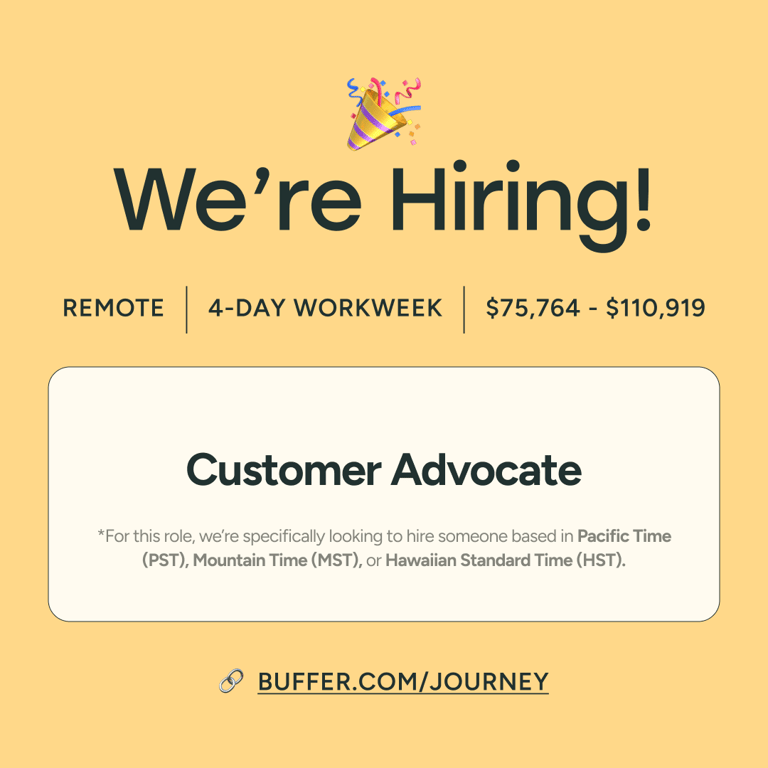
Did you know that out of the first 10 people at Buffer, 3 were customer support folks? It combined two of the most important early decisions I made with Buffer: 1️⃣ To make providing great customer service a defining part of the experience of using Buffer - Not only did we ensure that we had enough folks providing customer support that people would get a response fast, we also made sure that no matter where in the world customers were, they'd hear back from us within hours. Our first 3 customer support team members were spread across the US, UK and Australia to give us full timezone coverage in responding to customer support requests. 2️⃣ To be a remote company and give team members the flexibility to live their best lives - Being a remote company may not see like a big deal, but back in 2013 I could count the number of remote companies with two hands, and we were one of them. It was a special time and we felt like we were part of an important movement. I strongly believe that this decision and the other ways we've cultivated our culture over the years has led to folks choosing to stay at Buffer long-term. And the long-term context and genuine passion for our mission leads to improved experiences for customers. I mentioned that of our first 10 people, 3 were customer support folks. But did you know that 2 of these 3 people are still at Buffer today? They are Caro, who has been at Buffer 13 years, and Åsa, who has been at Buffer 12 years, 7 months. And of our 18-person customer service team, the average tenure is 9 years. Now, here's the most exciting thing I want to share: we're hiring a new Customer Advocate for the customer service team 🎉 This is a very special moment. We haven't hired a Customer Advocate since 2021. And we'd love to invite you to apply to join the team and provide world-class support to our wonderful, inspiring customers. We're looking for someone who is curious, proactive, and passionate about hospitality. You need to be quick on your feet, able to find answers to tricky questions, and be comfortable using AI tools to work more efficiently. We're also looking for an Customer Advocate who's passionate about helping creators and small businesses get off the ground and grow and is a creator themselves. Our ideal candidate is someone who actively schedules content with Buffer and can stay close to the daily challenges our customers face. The salary range for this role is $75,764 - $110,919, calculated with our salary formula based on experience and location. If this sounds like you, we'd love to hear from you! If this seems perfect for someone you know, please help spread the word by boosting this post or passing along the link. Link to apply to become a Customer Advocate at Buffer, view the full details of the role, requirements, and benefits: https://buffer.com/journey/51d56699-b877-4a8f-8164-f0df313f869a

Joel Gascoigne
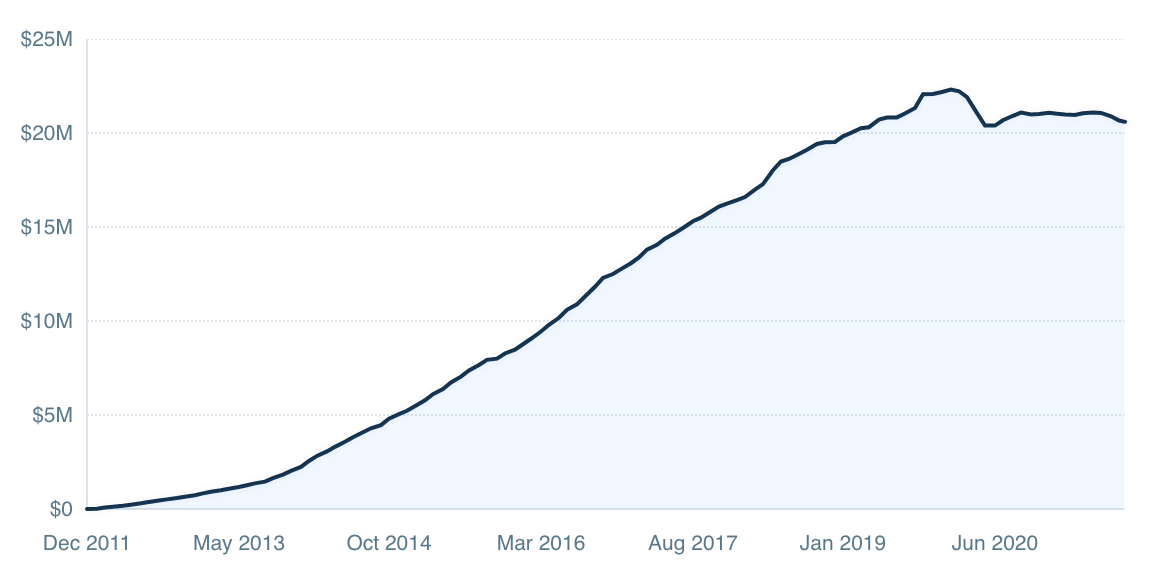
In 2020, after 9 straight years of growth, Buffer declined 4.96%. We would go on to decline a total of 20% over 4 years. How does it feel as a founder to go through this experience? Here are some of my journal entries from the initial stages of the decline: January 13th, 2020 "We're starting off with a decline, and this is concerning." January 30th, 2020 "I'm feeling a lot of anxiety right now. Our growth is stalling." April 12, 2020 "I'm just checking the metrics, and they look a lot worse than they did a week ago, or even just a few days ago." "March ended in a 1.41% drop in MRR. We could be close to a 3% drop for April, which is drastic." April 13, 2020 "I'm feeling deflated, off, and heavy right now. It's been a long day, and the numbers have started to take a turn for the worse in the past week." 2020 was hard, but in 2021 and 2022 we would go on to see even sharper declines of 6.39% and 7.75%. It was excruciating. I went through deep questioning, reflection on the journey so far, and where I wanted to take Buffer. Ultimately, we were able to pull through as a team and get back to a place of growth, profitability and new all-time-high revenue. Having been through this rollercoaster journey of growth, stalling and decline, and finding our way back to growth again, I've been starting to dedicate some time to reflect on the whole experience. Stay tuned for more content from me as I go through journal entries, strategy docs, metrics, and more to craft the story of losing our way, losing revenue, and rediscovering our why and growth once again. Want to hear me speak about the journey? I'll be sharing all the details in my talk at Business of Software USA in Raleigh, NC in a few weeks. Join me alongside some incredible speakers and a very special community of folks who appreciate what it takes to build real, human-centered businesses. See the link in the comments for the full details of my talk and the event.


Joel Gascoigne
A healthy freemium base is a growth savings account. Every month a portion upgrades. Remove the free plan and you get a one-time cash-out that looks like growth, but you're really just stealing from your future.

Joel Gascoigne
For many years at Buffer, any time someone moved on we'd backfill their role by default. About 5 years ago I changed my approach: by default don't backfill. I found that defaulting to backfilling roles meant that the team remained in a maintenance mindset rather than being in a builder mindset. Backfilling means assuming that we should keep things as they are, rather than allowing ourselves to reflect on whether there's another way. It's always worth seeing how the team adapts to a gap and whether a better way to organize the team emerges. Especially when leaders move on it's worth letting people who are hungry step up before immediately denying them that opportunity. I'm not saying never backfill, but to give it some time. There may be a more creative way forward. Or a little time may quickly determine that the role in it's existing form is absolutely needed. If you decide you need more help again, treat it as a new hire, not a re-hire or a backfill. Everyone is different and the organizational structure should always be evolving and adapting to the unique group of people involved.

Joel Gascoigne
AI is enabling innovation with new possibilities and also driving operational improvements across all roles. My hunch is that in the longer term, the operational gains will be adopted by most businesses and not be a true differentiator. While it's vital to keep up with the operational wins, strategy and innovation are more important than ever.

Joel Gascoigne
As a founder, I've drastically increased my tinkering time in the past year. It's been fun and has no doubt improved my strategic decisions for Buffer, too. I believe now more than ever before, tinkering time is essential as a founder. As AI models and tooling improved over the past two years, I found myself being drawn to exploring what is possible and getting back to building myself. I feel fortunate that I have a technical background at a time when AI has been growing and making it much faster and easier to build. I built Buffer in the early years, but I then went on to have an 8 year gap in coding as the company grew. Coding is something I always missed, but it never felt like I could be efficient enough writing code for it to be a good use of my time. AI has completely changed that equation. It's a dream come true to be able to go so quickly from ideas to working tools. I'm using Claude Code to build all sorts of little tools for my personal productivity and my various workflows as a CEO and creator. The rise of AI, for me personally, has been a forcing mechanism where there's just no question that I have to be playing with this new technology directly myself. I now see it as a key part of my role to be tinkering with AI, exploring ideas and problems, and feeding those reflections back into company strategy and resourcing decisions. And there's no real way to have high enough fidelity of the possibilities of AI and how fast things are changing without working with it with your own hands. If the executive team of your company is trying to make decisions on how to utilize AI from a purely theoretical lens, I think you should be worried right now. Even with a technical background I constantly feel behind. Every week it feels like the advancements in technology and tooling are 100x more than I could reasonably explore. And yet I am so energized about these times we're experiencing. It's rare to live through such a drastic shift and feel like you're genuinely seeing it unfold before your eyes. I'm here to play with this, keep my eyes wide open to the opportunities, and see where it leads.

Joel Gascoigne
I write a lot more than I publish, and one of my goals for 2026 is to release more of my writing. I'm going to think aloud and learn in public much more. If this resonates for you, here are a couple of great quotes I've recently come across to nudge you to publish more too: "Get comfortable publishing things that aren’t perfect. I know many people who wait too long to publish and, well, never do. They do this for years. If they’d gotten the ball rolling back then, they’d be better writers today. It’s weird: you’d think regular private writing would be sufficient to get better. But it isn’t. There’s no stakes. No feedback. The only way to get better is to ship." – Drew Breunig "If you're not releasing then you're just journaling. If you're not posting it publicly, if you're just keeping things to yourself, then you need to admit that's just a journal. You're not really being a writer, you're just journaling for yourself. I think to be a writer, the unspoken necessity of that definition is that you have to release it to the world, otherwise it's just your diary." – Derek Sivers

Joel Gascoigne
I believe that when a business shifts to value extraction instead of value creation, it's the beginning of the end. With Buffer, I’m trying to operate with what I’d call an “under-extraction” philosophy. Create real value for customers and lean into generosity in how we package it. I love how Tobi Lütke from Shopify put it: "Your customers notice if you're going into value extraction." The way he describes his job is inspiring: "adding as many levers as possible to the room and then not pulling any of them." In the past few years we've added countless new features and improvements without raising our prices. In recent years we've added the majority of new functionality to our free plan. We've never made people jump through hoops to cancel, and a few months ago we proactively cancelled subscriptions for inactive customers. We emailed them and said: unless you respond or start using the product again, we'll cancel at your next renewal. I want to put minimal energy into value extraction with Buffer. I believe that pouring our energy into how we can create the most value possible will mean that our results take care of themselves. The goal is to build real loyalty with customers and achieve genuinely sustainable long-term growth.

Joel Gascoigne
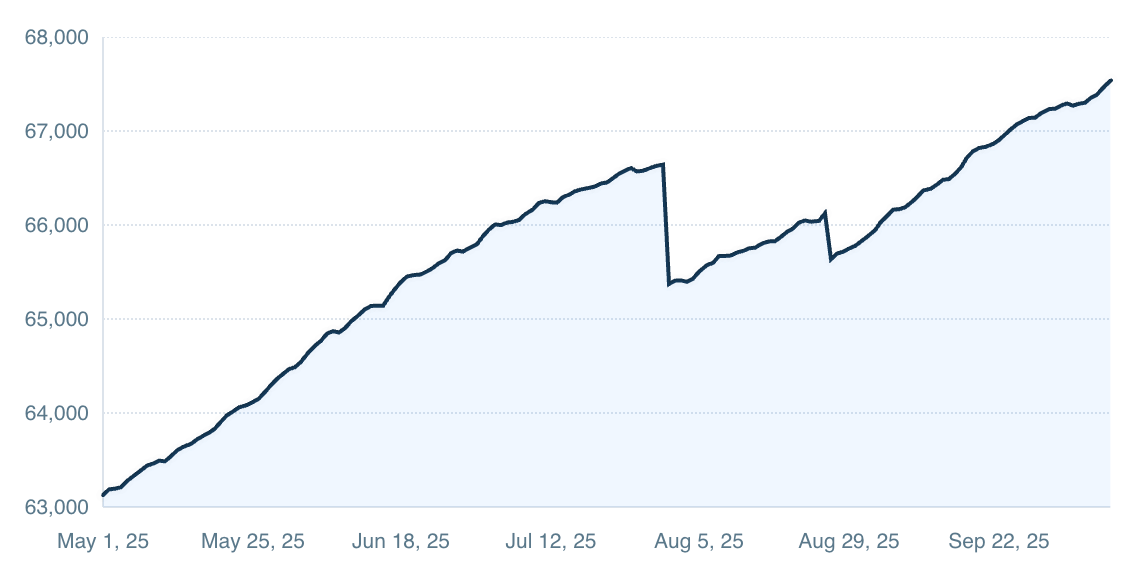
This is one of my favorite charts at Buffer right now. It's the chart of our number of paying customers. And it might look like we've just experienced some awful churn, but that's not what it is. Those drops in number of paying customers are when we proactively cancelled subscriptions for some of our inactive customers. We sent them an email and let them know that unless they responded asking to keep their subscription or started using the product again, we would cancel their subscription at the next renewal. We made a decision recently as a company that it doesn't feel right to keep charging customers who are not actively using the product. While keeping these customers might pad our revenue a bit, I believe it will make us a more responsive business to proactively cancel those inactive subscriptions and rely on revenue from customers who are actually getting value from the product.


Joel Gascoigne
Yesterday I sent the Buffer shareholder update with our August results to the ~80 alumni and investor shareholders. We also share these publicly so that we can be open with you, the Buffer community, around our results, the latest updates and what's coming up at Buffer. Here are Buffer's key metrics for August 2025: - MRR: $1,854,462 (+0.88%) - ARR: $22,253,545 (+0.88%) - Customers: 65,815 (+0.69%) - MAU: 185,129 (-3.33%) - ARPU: $28.17 (+0.18%) - Team Size: 70 (+1 person) - Revenue Per Employee: $317,117 (+0.55%) - Net Income: $296,544.16 (+9.37%) - Bank Balance: $3,585,565 (+12.43%) August was our second month where our net profit was more than our total profit for the whole of 2024 (and in fact, any year since 2020). We finished August with $296K in net income, and this brings year-to-date profit to $1.3M. Read the full shareholder update here: https://buffer.com/shareholders/august-2025

Joel Gascoigne
I've spent a lot of time thinking about interfaces recently. What is the value of a great user interface in a world with AI-assisted and agent-driven work? Since ChatGPT, Claude and other chat-based AI assistants were introduced, some have suggested that UIs are not necessary or optimal anymore. I have a slightly different take. I believe what's really going on is that chat-based AI assistants give you so much power and flexibility that generally isn't available in most UIs, and due to this fact, we would often choose a chat-based interface over something else. I think that graphical UIs are going to catch up pretty fast to become a vital companion to chat-based UIs. In fact, there's something really delightful about using a great graphical UI in combination with a chat-based AI assistant. We've been thinking about this a lot at Buffer. To make Buffer feel awesome to use in this new world, I think a few things are vital: - That you can do everything you can do in the web and apps via chat-based AI assistants. This means a solid API, MCP, CLI. - That the graphical UI is truly real-time. You want to be able to work with a chat-based assistant while having the graphical UI open, and see changes happen immediately. This is going to be a big one for us to tackle at Buffer soon. - The product is geared around flexibility, interoperability and customization. If you can personalize the UI to your needs, and you build on it easily, you'll feel great about it. If you can connect the product easily with other platforms, you will feel in control of your workflows. - The ability to interact with the product in a back and forth manner towards great outcomes. This is really what chat-based AI assistants excel at, but there’s no reason the general paradigm can’t apply to many different user experiences. I continue to think that great UIs are a big part of the future, even with the advent of chat-based AI assistants and voice control. I think they won't be utilized 100% of the time in the way they have for the past decades, they will be one of many interfaces to products. I personally still want that interface, and my expectations for the graphical user interface have actually increased.

Joel Gascoigne
Michael Porter's productivity frontier concept is playing out in real-time. We have 1-2 years where the frontier is getting pushed out by AI before it settles. We get to decide: wait for best practices to emerge, or engage in rebuilding? At Buffer we're choosing to be in the mess of the frontier.

Joel Gascoigne
Something I've been having a lot of fun with recently: I've been building custom AI agents that help me with my weekly and monthly reviews. I already had my GTD productivity system pretty well documented in Obsidian, and I had Claude Code create agents based on the documentation to help me do my weekly review, which I'd been struggling to keep up with each week. The agents are just markdown files that have the weekly review process documented including using Todoist via the command line to fetch my active projects and next actions. I can just ask Claude Code to fetch and run the agent, and it walks through the weekly review with me. It can do some pretty powerful reasoning around rescheduling, my capacity, and even things I might miss. It asks me questions and based on my answers it makes all the changes in Todoist on my behalf. This has streamlined the weekly review process and reduced friction for me in a way that is helping me get back to the core principle of GTD, which is to get things out of my head and into a system that I keep updated and can trust. It's helping me crank through tasks and be more clear minded, and it's been giving me so many ideas about ways I could extend this workflow.

Joel Gascoigne
A pattern I've noticed as a CEO is that people will sometimes try to save me time by presenting just the specific question or items they're hoping to get sign off on. I'm sure that in some ways I've caused this pattern by presenting as busy, and probably in other ways it's a learned habit people have developed from their career experiences. It's probably somewhat natural to try to save the CEO time, and many CEO's may be quite efficient at making decisions on much less data than I am. But for me, I see it as a critical part of my job to strive to make great decisions, model how I approach doing that, and take every opportunity to help people grow by thinking through decisions holistically. Many problems arise from companies being too siloed, and it's natural for someone in an individual contributor position to not always have the full picture of strategic choices across other areas. Similarly, I often lack the detail-level context that an individual has. Combining our forces, we can arrive at the optimal decisions. As the CEO, I believe I am uniquely placed to keep the whole strategy in my head and draw connections where others may not spot them. My goal when helping teams make strategic decisions is to ensure that our combined efforts across the organization are interconnected and greater than the sum of their parts. Over time, I've become better at spotting this habit early on and shifting the course of the conversation. I will regularly ask for more context and encourage us to step back to a higher level of context in a meeting before going back into the decisions that need to be made. Very often, we arrive at different outcomes than we would have by working only within the details.

Joel Gascoigne
It’s a good idea to aim to progress in other dimensions of life throughout the duration building a company. I've come to believe that while working on a company (in my case Buffer) you should be progressing in other dimensions of your life. Generally, any sort of progress is not linear. Meaning that sometimes you’re seeing significant growth and progress, sometimes you'll be going through a flat patch, and sometimes even declining. If you only have goals for one dimension or aspect of life, when you're having a hard time in that area you can feel crushed. If you have multiple dimensions of life you're focusing on with clear goals and progress, you can set yourself up to always be winning in some area. The types of dimensions this could be applied to are those such as friendships, family / relationships, exercise and fitness, investment and financial freedom, hobbies or skills, experiences, mindfulness and self work, etc. Personally, no matter what the outcome of Buffer, and no matter the phase it is in, I want to have several other dimensions of my life in which I’m progressing. If I approach things in this way, then whichever moment in time I pick, whether 1 year in, 5 years in or 15 years in, I will have progressed in life in terms of my overall goals and dreams. Alongside trying to make Buffer successful, I also work to become more fit through strength training, I'm trying to become a better parent to my two boys, a better partner to my wife, and I want to progress in hobbies which right now include playing piano, writing and growing my network, and tinkering with code, automation and AI. I’m also trying to build a new cardio habit with running and skiing or mountain biking depending on the season. I've been building Buffer for 15 years now, and I've had a wide variety of hobbies, goals, and self-improvements I've focused on over time. This approach is in contrast to the "deferred life plan", where you go all-in on your startup and sacrifice everything else, with the hope that one day it will all work out. I see people do this a lot, but it could be potentially devastating if the startup doesn't work out. And regardless of the outcome, startups come with so many lows amongst the highs that it's really worthwhile to have something else that's going well in life on those tough days, weeks or months.

Joel Gascoigne
Buffer just turned 15 years old! And we're fortunate to be closing out our best year in the past 7. We have 69,000 customers, a $23M annual run rate, and will achieve over $2M in profit in 2025. To mark 15 years of Buffer, here are 15 of the key lessons I've leaned first hand as a founder CEO. These may not all apply for you, but I hope some are useful and they at least get you thinking: 1. Survival is a competitive advantage. Setting up the ownership structure to play an infinite game is both a great strategy and a lot of fun. 2. Becoming our own customer again has supercharged our motivation, productivity, taste, and clarity of problems to solve. 3. Sustained results over the long term come primarily from differentiation rather than purely from execution. 4. It's generally better to double down on the strengths of your product than shore up weaknesses. 5. Customers come first, because without customers there was never a business in the first place. 6. It's better to shape the company structure around everyone's strengths than try to fill out a perfectly neat org chart. 7. There are many different flavors of CEO, so be yourself and build the team around who you are, rather than doing what you've read a CEO should do. 8. Intuition is an undervalued trait in all roles. Tapping into it and helping people develop it can lead to creating something special. 9. When great strategy and strong operations come together you create magic. You'll generally be stronger in one than the other, so elevate those who are great at the other side of the equation. 10. Even with success, I may feel low. It can feel unsettling when tough emotions hit especially when it seems like I should feel awesome, but there are always clues to follow to get back to a better place. What I find when I explore the emotions can lead to a breakthrough. 11. When you take care of the team, they will give so much to the company and customers. Trust them, be generous, give autonomy and flexibility, and many people will stay for over a decade. 12. Building a truly great product or new feature is dependent on not settling for good enough. Ask yourself if you're really proud of what you're putting out there, and put in the work to feel awesome about your contributions. 13. You're always finding your way. It's better to settle into continual pathfinding than put yourself down for not having perfect clarity. It's a moving target. 14. It's not worth sacrificing health, family, friendships and hobbies for some hypothetical outcome that will solve everything. It's better to try to have it all now. 15. It's worthwhile shooting for the moon. Sometimes you can just choose the more ambitious path. It might feel scary but in my experience it's almost always the right choice. We can achieve far more than we realize. Building and leading Buffer has been the gift that keeps giving. Thank you for following along, whether it's been for the entire journey or since more recently.

Joel Gascoigne
Am I proud of this? This has become one of the most important questions I regularly ask myself. I also ask people in my team: are you proud of this? As a company starts to scale, there will be others making decisions, building functionality, and creating experiences. As that happens, you should not expect that others approach things exactly as you would. You need to give people space, and let them surprise you with their creative ways of solving problems. But this can become a trap, too. Sometimes you try to let people do things their own way, but the quality isn't there, and you don't see the results you need. As a leader, you have to maintain a high bar, otherwise the product, service, culture will deteriorate. Asking "am I proud of this?" cuts through all of this. It's a beautiful question, because the answer is clear. I'm either proud of the work done, or I'm not. And what's really special about the question is that someone could propose an idea or a solution that I would never have thought of, and I can absolutely be proud of them, and proud of Buffer, for putting that value out to customers. I've also found that asking my team "are you proud of this?" can help them snap out of trying to meet my expectations, and encourage them to look within themselves, to actually use their intuition and gut. It can nudge people to go deeper in understanding customers, so they can emerge from that context with a more natural sense of the right thing to build, or the right way to respond. This question can help ensure that people don't stop short of producing something truly remarkable. It's easy to let viability and constraints get in the way of greatness. I often find in meetings we can be so focused on having data or expectations give us the answer, and asking "are you proud of this?" can sometimes feel jarring (in a good way), it's often not expected to actually check in on how you personally feel about the work you're doing. I believe companies and customers need more folks who are invested enough to feel their own conviction on something. Asking "am I proud of this?" can guide you as a leader towards maintaining a high quality bar, while having a wide variety of approaches to solving problems. I wish I'd started asking myself this question a decade ago. Try it out and let me know how it feels for you.

Joel Gascoigne
Don’t have a free plan unless serving the people who use your free plan is truly part of your mission. If you’re thinking about your free plan just as a step to a paid plan, you’re unlikely to build a successful freemium model. A good free to paid conversion rate is 3-6%, and this means that 94-97% of users on the free plan will never pay. If you can’t appreciate and enjoy serving those folks, and truly build something of value for them, I don’t think you’ll make a freemium model work and you should just have a trial.
.png/public)